
ADGM vs DIFC Holding Company: Which UAE Financial Hub Fits Your Wealth Strategy?

Selecting the right jurisdiction for asset protection, corporate structuring, or family wealth consolidation in the Middle East often comes down to a direct comparison: an ADGM vs DIFC holding company. Investors, business owners, and regional founders face significant challenges when trying to protect operating subsidiaries, manage global real estate, or raise venture capital. Miscalculating setup costs, picking the wrong legal framework, or navigating complex substance regulations can lock capital into a mismatched jurisdiction, leading to expensive restructuring down the road.
Establishing an ADGM vs DIFC holding company structure provides a clear, high-value solution to these corporate challenges. Both the Abu Dhabi Global Market (ADGM) and the Dubai International Financial Centre (DIFC) operate as independent financial free zones, complete with English Common Law legal frameworks, tax efficiencies, and 100% foreign ownership. Determining whether Al Maryah Island in Abu Dhabi or Dubai’s central financial district serves as the right home for your assets requires examining structural nuances, annual costs, setup speeds, and physical office mandates.
What Is a Holding Company in the UAE Financial Free Zones?
A holding company is a corporate entity established primarily to own assets, hold shares in subsidiary businesses, and manage intellectual property or real estate portfolio rights rather than conduct active day-to-day commercial trading or financial services.
Within the UAE, setting up a holding company inside offshore-style international financial centers like ADGM or DIFC grants parent companies an extra layer of protection, governance, and institutional backing.
Key structural elements include:
- 100% Foreign Ownership: Complete equity retention with no requirement for a local UAE partner.
- Capital Protection: Insulated holding structures that isolate liabilities away from core operational assets.
- Dividends and Capital Gains: Streamlined, tax-neutral distribution flows between subsidiaries and international shareholders.
- Flexible Share Classes: Ability to issue voting, non-voting, deferred, or preferred shares to match investor requirements.
Legal Systems and Judicial Infrastructure

Although both financial free zones rely on English Common Law principles, their judicial application and regulatory mechanics differ.
Direct Common Law Adoption (ADGM)
ADGM takes a direct approach to legal governance. Through its Application of English Law Regulations 2015, ADGM directly incorporates English common law and equitable principles alongside relevant UK statutes into its legal system. For international funds, private equity firms, and UK-connected family offices, this setup provides a high degree of predictability. When an ADGM court hears a contractual dispute, judges draw directly from established precedents set by the English High Court and Court of Appeal.
Codified Common Law Framework (DIFC)
DIFC operates its own independent common law judicial system through the DIFC Courts. Instead of adopting English statutes directly, DIFC drafts, enacts, and codifies its own laws (such as the DIFC Companies Law No. 5 of 2018) tailored specifically to Dubai’s financial ecosystem. While influenced by English jurisprudence, DIFC has built up over two decades of local precedent, making it a highly respected commercial legal forum across the Middle East, North Africa, and South Asia (MEASA) region.
Legal Expert Insight: “Choosing between ADGM and DIFC often comes down to legal preference. UK-based institutional investors prefer ADGM because law firm opinions mirror standard UK documents. Middle East-focused groups often choose DIFC because local banks and regional authorities have worked with DIFC corporate resolutions for over twenty years.” Sarah Al-Hassan, Senior Corporate Structuring Legal Counsel
Setting Up an ADGM vs DIFC Holding Company: Cost Breakdown
While both jurisdictions offer holding structures, private companies limited by shares, Special Purpose Vehicles (SPVs), and Prescribed Companies, setup costs and ongoing licensing fees vary significantly.
(Note: Fees vary based on corporate complexity, underlying assets, and whether the entity qualifies for special SPV/Prescribed Company categories.)
Cost Analysis for ADGM
ADGM’s corporate framework, particularly for Category 3 Category SPVs and holding companies, remains highly cost-competitive. Setting up an ADGM holding entity usually requires an initial incorporation fee of approximately $1,500 to $3,000, plus annual commercial license renewals ranging from $2,000 to $4,000 depending on the exact classification.
Because ADGM permits registered address arrangements through certified Corporate Service Providers (CSPs) or low-cost flexible desk spaces, initial capital outlay stays lean. This makes it an appealing environment for venture studios, tech startups, and holding companies managing multiple sub-entities.
Cost Analysis for DIFC
DIFC maintains a premium pricing structure. Application and registration fees for a standard holding company typically start near $8,000, with annual commercial license fees around $12,000. Additionally, DIFC mandates a physical workspace or approved desk solution within the DIFC jurisdiction (unless qualifying for specific Prescribed Company categories), which adds $5,000 to $10,000+ per year in real estate costs.
However, for established multinational corporations, state-backed entities, and global private equity firms, DIFC’s higher entry barrier is often balanced out by its strong market reputation and immediate access to tier-one private banking networks.
Structural Requirements: Office Space, Visas, and Economic Substance
Understanding the physical footprint requirements in both zones prevents unexpected operational costs later on.
Workspace Mandates and Real Estate Options
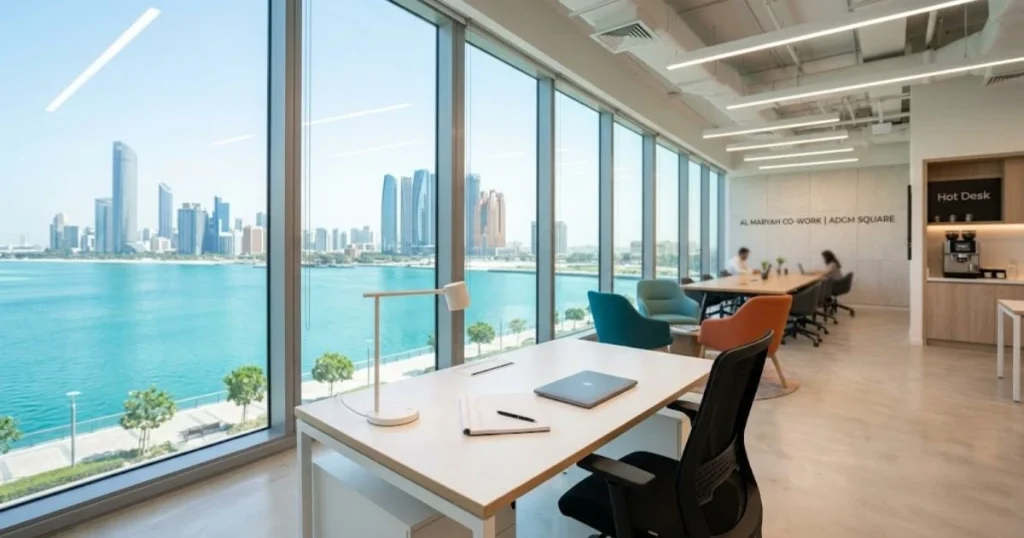
- ADGM Workspace Rules: ADGM offers flexible office space rules. Holding companies and SPVs can often use registered addresses provided by licensed local Corporate Service Providers without leasing standalone commercial space, keeping physical overhead low.
- DIFC Workspace Rules: DIFC mandates that all standard entities secure registered commercial premises within the DIFC zone. While small setups can use flexible desks in the DIFC Business Centre, demand for space keeps lease costs higher than in Abu Dhabi.
Visas and Staffing Flexibility
In both zones, the maximum number of UAE residency visas an entity can process correlates directly with the size of its leased office space. ADGM provides flex-desk packages that issue 1 to 2 visas without requiring a dedicated office suite. DIFC links visa quotas directly to physical square footage, making expansion suited for businesses building out local operational teams.
UAE Economic Substance Regulations (ESR) and Corporate Tax
Both ADGM and DIFC holding companies must comply with UAE federal tax requirements, including Corporate Tax regulations.
- Tax Neutrality: Holding companies in both financial centers enjoy 0% corporate tax on qualifying income, including foreign dividends, capital gains from qualified shareholdings, and intra-group reorganizations, provided they meet qualifying free zone entity conditions.
- Economic Substance: Under federal guidelines, holding companies that only hold equity interests and earn dividend or capital gain income face simplified Economic Substance requirements. They must maintain a legal presence, submit annual tax declarations, and retain adequate records within their respective free zone.
Step-by-Step Incorporation Process
Establishing an ADGM vs DIFC holding company involves a systematic incorporation journey.
1.Select Your Jurisdiction & Entity Type:
Evaluate whether ADGM (direct common law, flexible office footprint) or DIFC (codified common law, established banking ecosystem) best aligns with your strategic objectives, funding plans, and operational budget.
2.Name Reservation & Initial Approval:
Submit 2 to 3 proposed corporate names through the ADGM Online Registry Solution or the DIFC Client Portal. Ensure the name clearly reflects your holding activity and avoids restricted legal terms.
3.Draft Governance Documentation:
Prepare Articles of Association, Memorandum of Association, shareholder resolutions, and ultimate beneficial ownership (UBO) disclosures tailored to your family governance or venture funding requirements.
4.Lease Address or Partner with a CSP:
Secure a registered address via a Corporate Service Provider (in ADGM) or execute a commercial lease agreement within the DIFC Business Centre.
5.License Issuance & Bank Account Setup:
Receive your commercial license from the Registration Authority, register for UAE Corporate Tax, and complete corporate bank account onboarding with a regional or international bank.
Head-to-Head Comparison: ADGM vs DIFC Holding Company
When to Choose ADGM
Opting for an ADGM holding company makes sense if you prioritize speed, low overhead, and legal alignment with UK precedent. High-growth venture startups, technology funds, international crypto projects, and multi-layered holding groups frequently select ADGM because its SPV structures allow rapid scaling without heavy real estate commitments.
When to Choose DIFC
Opting for a DIFC holding company works best if brand prestige, immediate access to Dubai’s private wealth network, and proximity to global investment banks take priority. Large family offices, established asset managers, and legacy corporate conglomerates choose DIFC because its long-standing reputation streamlines bank account opening and institutional co-investments.
Real-World Case Examples
Practical Scenario A: International Tech Startup Raising VC Capital
A fast-growing fintech company operating across Latin America and Asia wanted to structure a parent holding company in the UAE to collect investment from international venture funds.

- The Challenge: Minimizing upfront capital spend while providing international investors with a clear, recognized common law legal structure.
- The Solution: The founders chose an ADGM holding company combined with a category-specific SPV layer. They saved over $18,000 in initial setup and physical rent costs, using a Corporate Service Provider address to finalize their investment round within three weeks.
Practical Scenario B: Regional Real Estate & Private Equity Portfolio
A Middle Eastern family enterprise sought to consolidate holding rights for commercial real estate developments across Dubai and Europe under a single legal roof.
- The Challenge: Establishing immediate credibility with regional private banks to secure syndicated debt facilities.
- The Solution: The enterprise set up a DIFC holding company. Despite higher initial licensing costs and mandatory physical workspace fees, the DIFC brand accelerated bank compliance checks, allowing the family to secure debt financing ahead of schedule.
Key Mistakes to Avoid During Setup
- Choosing the Wrong Commercial Activity Code: Ensure your corporate charter strictly specifies holding company activities rather than commercial management or regulated financial advisory services, which require additional regulatory approvals.
- Failing to Plan for Bank Compliance: Bank account setup across the UAE requires detailed Ultimate Beneficial Ownership (UBO) transparency, verified source-of-wealth documentation, and clear corporate track records regardless of jurisdiction.
- Ignoring Tax Registration Obligations: Even if your qualifying holding company benefits from a 0% corporate tax rate, it must register for UAE Corporate Tax and file annual returns.
Frequently Asked Questions
Can an ADGM or DIFC holding company own mainland UAE real estate?
Yes. Both ADGM and DIFC holding companies can hold commercial and residential real estate assets across the UAE. However, property acquisitions in Dubai or Abu Dhabi require registering your holding entity with the local land department (such as the Dubai Land Department or Abu Dhabi Municipality).
Can I convert or redomicile my foreign holding company into ADGM or DIFC?
Yes. Both financial free zones allow corporate redomiciliation (continuation) from foreign jurisdictions like the British Virgin Islands (BVI), Cayman Islands, or Jersey. Redomiciling lets your company transfer its legal home to the UAE while keeping its original corporate history, existing contracts, and operational track record intact.
Do I need a physical office in the UAE to run a holding company?
In ADGM, holding entities and SPVs can often fulfill address requirements using a licensed Corporate Service Provider’s registered address. In DIFC, holding companies generally require physical office space or a dedicated workspace within the DIFC business district, unless they qualify under specific Prescribed Company rules.
Final Verdict: ADGM vs DIFC Holding Company
Choosing between an ADGM vs DIFC holding company comes down to balancing operational cost against ecosystem prestige.
ADGM provides a lean, flexible framework that directly incorporates English legal precedent. Its lower entry costs, flexi-desk options, and fast incorporation timelines make it a practical choice for early-stage tech ventures, holding structures, and cost-conscious asset managers.
DIFC offers an established, prestigious environment with two decades of local precedent in Dubai. Higher setup fees and physical workspace mandates are balanced out by immediate proximity to tier-one private banks, venture capital funds, and institutional investors.
Carefully evaluate your budget, legal preferences, and long-term capital goals to select the jurisdiction that best protects and grows your global portfolio.
Ready to Structure Your UAE Holding Company?
Setting up the right corporate structure requires clear, expert guidance on local regulations, tax compliance, and legal frameworks. Whether you need help deciding between ADGM and DIFC, redomiciling an offshore business, or drafting custom governance documents, expert advice ensures a seamless process.
Contact Our Corporate Structuring Specialists Today to book your consultation and set up your UAE holding company with confidence.