Safe Investing Middle East: Your Complete Guide to Wealth Preservation in 2026
When markets feel unpredictable, the urge to protect your hard-earned capital becomes the top priority. Many investors today find themselves staring at a screen, overwhelmed by shifting global interest rates and the noise of geopolitical headlines. You might feel like you’re standing on shaky ground, wondering if there is a way to grow your savings without exposing yourself to the “all or nothing” risks of volatile markets. This common anxiety—the fear of losing what you’ve built—is exactly why stability is the new gold.
The good news is that safe investing Middle East strategies have never been more robust or accessible. By pivoting your focus toward government-backed instruments, diversified real estate, and the strengthening regulatory frameworks of the GCC, you can move from a place of worry to one of confident growth. This guide will walk you through the most reliable, low-risk paths available in the region right now, helping you build a portfolio that stands firm regardless of the economic weather.
The Foundations of Safe Investing Middle East
Before we dive into specific assets, it is vital to understand why the Middle East, particularly the GCC (Gulf Cooperation Council), has become a sanctuary for conservative capital. In 2026, the region is no longer just about oil; it is about institutional maturity.
The concept of safe investing Middle East is built on three pillars:
- Strict Regulation: Financial hubs like the DIFC in Dubai and ADGM in Abu Dhabi operate under English Common Law frameworks, providing high levels of investor protection.
- Currency Pegs: Most regional currencies are pegged to the US Dollar, removing the “hidden tax” of currency devaluation for international investors.
- Fiscal Resilience: Even with fluctuating oil prices, sovereign wealth funds in Saudi Arabia, Qatar, and the UAE provide a massive cushion that supports local infrastructure and banking stability.
Understanding the Risk Spectrum
Safe investing does not mean “zero risk,” but rather “controlled risk.” For instance, a high-yield savings account in a top-tier UAE bank is considered very low risk, while a REIT (Real Estate Investment Trust) is moderate. The goal is to balance these to meet your specific needs.
Top Low-Risk Investment Vehicles for 2026
If you are looking for places to park your money where it will be safer than a speculative stock, consider these categories.
1. Government and National Bonds
National bonds remain the gold standard for safe investing Middle East. In the UAE, for example, National Bonds (the company) offers Sharia-compliant saving schemes that are backed by the government of Dubai.
- Average Returns: Typically range between 3% and 5% depending on the term.
- Liquidity: Most plans allow you to withdraw funds after a specific period (like 30 to 90 days) without losing your principal.
- Expert Tip: “Think of bonds as the ‘anchor’ of your ship,” says Sarah Al-Mansoori, a senior wealth manager in Abu Dhabi. “They won’t win a race in a storm, but they will keep you from drifting into dangerous waters.”
2. High-Yield Savings Accounts (HYSA)
In 2026, digital banking in the Middle East has become incredibly competitive. Traditional banks and Neo-banks are offering rates as high as 6.25% on specific savings products to attract liquidity.
| Bank Type | Typical Rate (2026) | Best For |
| Digital Banks (e.g., Wio, Liv) | 5.0% – 6.25% | Monthly savers / Emergency funds |
| Traditional Banks (e.g., FAB, ENBD) | 3.5% – 4.5% | Large lump sums / Relationship perks |
3. Sukuk (Islamic Bonds)
For those seeking an ethical and secure route, Sukuk are a primary tool for safe investing Middle East. Unlike conventional bonds, which are debt-based, Sukuk represent a share in an underlying asset. This makes them inherently more transparent. S&P Global Ratings recently noted that the Sukuk market is expected to continue its growth through 2026, supported by falling interest rates which make these fixed-income assets more attractive.
Real Estate: A Tangible Safe Haven
Real estate has always been a favorite for those seeking safe investing Middle East, but the strategy in 2026 has shifted from “flipping” to “yielding.”
The “Golden Visa” Impact
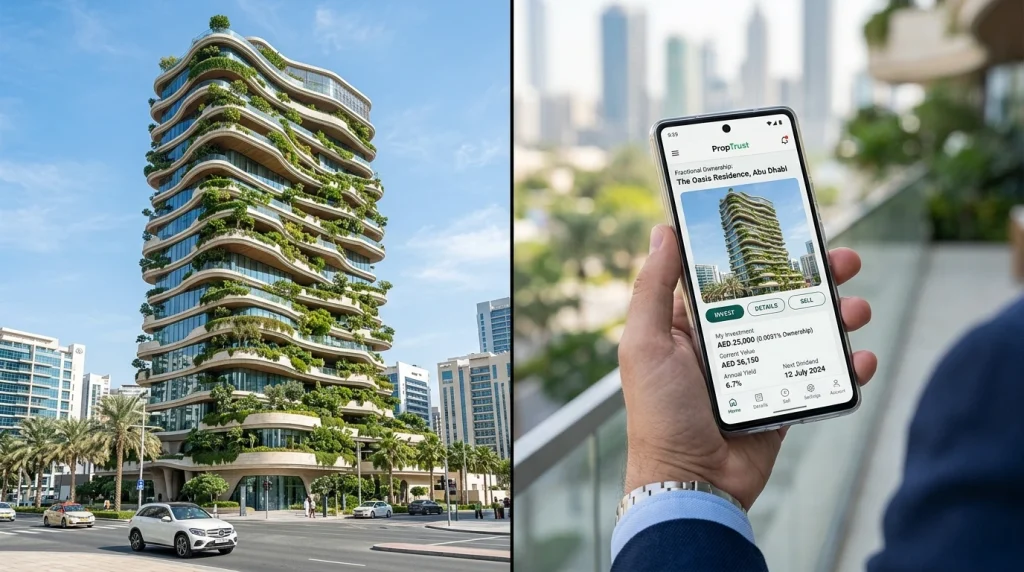
The introduction and expansion of long-term residency visas tied to property ownership have stabilized the market. Investors aren’t just buying to sell; they are buying to stay or provide long-term rentals. This shift reduces the “bubble” risk that often plagues fast-growing cities.
REITs: Property Without the Paperwork
If you don’t want the hassle of managing a physical apartment, Real Estate Investment Trusts (REITs) are an excellent alternative.
- Emirates REIT and Al Mal Capital REIT allow you to buy shares in a diversified portfolio of schools, hospitals, and malls.
- Returns: Usually provide a dividend yield of 5% to 8%.
- Safety Factor: They are traded on public exchanges like Nasdaq Dubai, meaning you can sell your shares anytime you need cash.
Real-World Example: “I shifted 30% of my portfolio into UAE REITs last year,” shares Marcus Thorne, a long-term expat. “While the crypto markets were swinging wildly, my REIT dividends paid for my children’s school fees every quarter like clockwork.”
Why Saudi Arabia is a New Frontier for Safety
When we talk about safe investing Middle East, we cannot ignore the massive transformation in Saudi Arabia under Vision 2030. The Kingdom has overhauled its legal system to make it easier and safer for foreign individuals to invest.
The Removal of the QFI Regime
The Saudi Capital Market Authority (CMA) has moved to remove many of the hurdles for “Qualified Foreign Investors.” This means the Main Market (Tadawul) is now more accessible. Large, state-backed companies like Saudi Aramco or SABIC provide a level of “too big to fail” security that is rare in emerging markets.
Critical Minerals and AI
Saudi Arabia is currently pouring billions into two sectors: critical minerals (lithium, copper) and AI infrastructure. Because these are national priorities, the companies operating in these spaces often benefit from significant government oversight and support, making them a “calculated” safe bet for the long term.
5 Practical Tips for Beginners
To ensure your journey into safe investing Middle East is successful, follow these five golden rules:
- Diversify Across Borders: Don’t put all your money in one country. Split your “safe” bucket between the UAE, Saudi Arabia, and perhaps Qatar.
- Verify Licensing: Only use platforms regulated by the DFSA, FSRA, or the Saudi CMA. If a platform isn’t licensed, your money is not safe.
- Understand the Fees: Even a “safe” investment can lose money if the management fees are too high. Look for expense ratios under 1% for funds.
- Stay “Liquid” with Your Emergency Fund: Keep at least six months of living expenses in a high-yield savings account before you lock money into long-term bonds.
- Rebalance Annually: Markets change. What was a safe 5% return last year might be 3% this year. Review your portfolio every 12 months to ensure it still aligns with your goals.
The Role of Gold in the Middle East
Gold is woven into the cultural fabric of the region, but it’s also a cornerstone of safe investing Middle East.
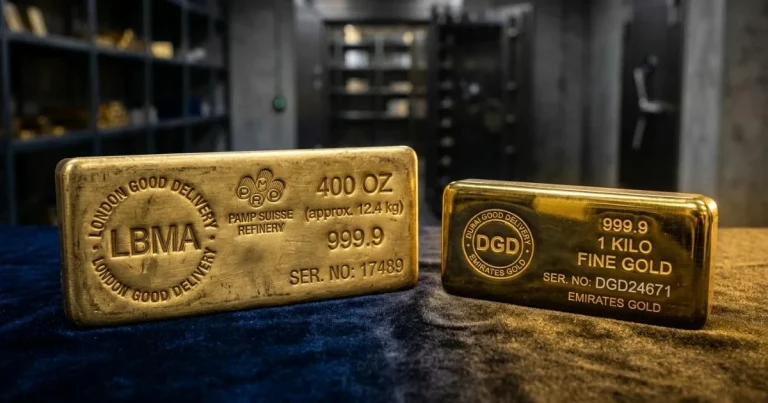
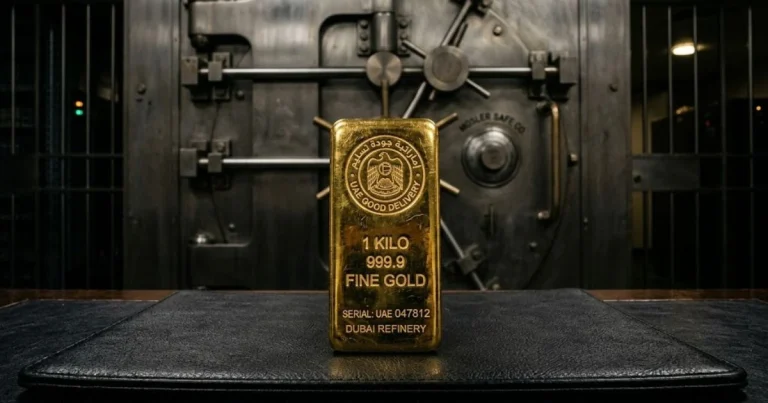
In 2026, gold remains the ultimate “disaster insurance.” While it doesn’t pay a dividend or interest, it protects your purchasing power when inflation rises. In Dubai, often called the “City of Gold,” you have unique ways to invest:
- Physical Bullion: Buying tax-free gold coins or bars from reputable dealers.
- Gold ETFs: Trading gold via your brokerage account without needing a physical safe.
- Gold Savings Plans: Many local banks allow you to buy “digital gold” starting with as little as 100 AED per month.
Navigating Geopolitical Risk
A common question regarding safe investing Middle East is: “What about the headlines?” It is true that the region can face periods of tension. However, professional investors look at the resilience of the markets during these times.
During recent global conflicts, GCC markets have often remained “islands of stability.” This is due to the high levels of liquidity in the local banks and the fact that high energy prices—which often accompany global tension—actually strengthen the fiscal position of Middle Eastern governments. Diversification is your best tool here; by spreading your risk across different sectors (like healthcare, education, and government bonds), you minimize the impact of any single event.
Building Your “Safety-First” Portfolio
What does a safe investing Middle East portfolio look like in practice? Here is a sample allocation for a conservative investor:
Sample Allocation Table (Total $10,000)
| Asset Category | Amount | Specific Vehicle | Expected Risk |
| Cash / Emergency | $3,000 | High-Yield Savings Account | Very Low |
| Income / Stability | $3,000 | UAE National Bonds / Sukuk | Low |
| Passive Real Estate | $2,000 | Listed REITs (Nasdaq Dubai) | Moderate |
| Safe Haven | $1,000 | Physical Gold or Gold ETF | Moderate |
| Growth Blue-Chips | $1,000 | Dividend-paying Saudi or UAE Stocks | Moderate-High |
Common Misconceptions About Middle East Investing
To truly master safe investing Middle East, we must clear up some common myths.
Myth 1: “It’s only for millionaires.”
This couldn’t be further from the truth. In 2026, apps and platforms allow you to start with as little as $50. Fractional property ownership and micro-savings plans have democratized the market.
Myth 2: “It’s all about oil.”
While oil is the engine, the “car” is now diversified. Sectors like renewable energy, tourism, and financial services are growing faster than the oil sector in many GCC nations. Investing in a UAE diversified fund today means you are betting on a modern, tech-driven economy.
Myth 3: “There are no taxes, so there’s no regulation.”
Lack of personal income tax does not mean a lack of rules. The regulatory bodies in the region are some of the most active in the world, constantly updating laws to match international standards (like the OECD’s global minimum tax initiatives).
Leveraging Technology for Safer Decisions
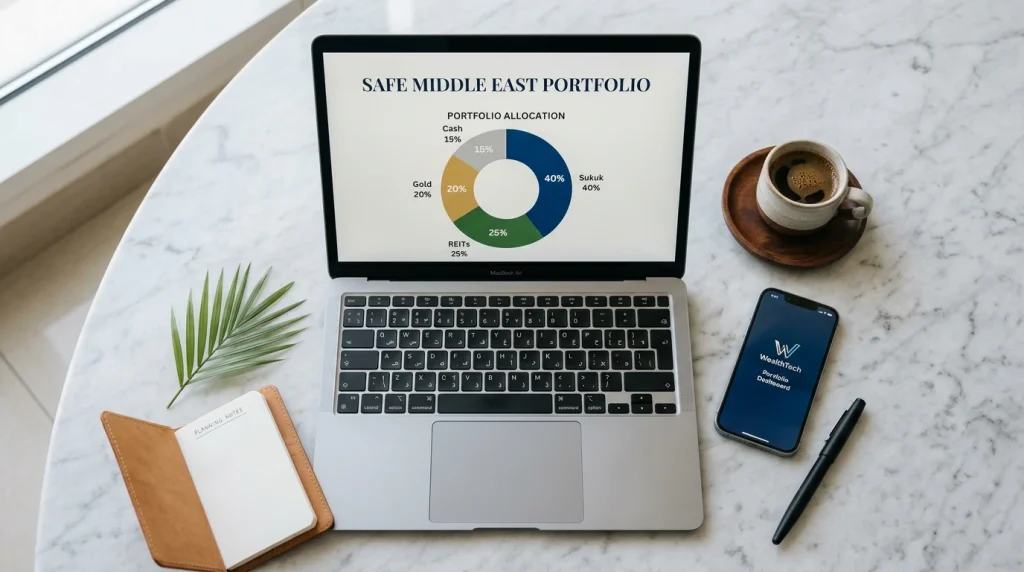
The rise of “WealthTech” has made safe investing Middle East much simpler. Robo-advisors are now widely used to automate the diversification process.
These platforms use algorithms to ensure your money is automatically spread across different asset classes based on your risk tolerance. If the stock market drops, the robo-advisor might shift more of your future contributions into bonds to keep your profile balanced. This “hands-off” approach is often safer for beginners because it removes the emotional urge to “panic sell” during short-term market dips.
Educational Resources and Staying Informed
Knowledge is the ultimate safety net. To stay ahead in the world of safe investing Middle East, you should regularly consult:
- The National & Gulf Business: Excellent for daily market updates and local policy changes.
- SCA (Securities and Commodities Authority) Website: For checking the license status of any investment firm.
- DIFC / ADGM Reports: These hubs release quarterly insights into the financial health of the region.
“I always tell my clients to spend more time reading the fine print than the marketing brochures,” says David Miller, an investment consultant based in Doha. “The safety of an investment is often hidden in the ‘terms of withdrawal’ section.”
Sustainable and Ethical Investing
Another growing trend in safe investing Middle East is ESG (Environmental, Social, and Governance) investing. In 2026, many regional investors are looking for “Green Sukuks” or funds that invest in solar energy projects like those in the Neom region or Dubai’s Mohammed bin Rashid Al Maktoum Solar Park.
These are often considered safe long-term bets because they are aligned with national strategic goals. When a government needs a project to succeed for its 2030 or 2050 targets, the investments surrounding that project often come with additional layers of stability and institutional support.
Conclusion:
Achieving safe investing Middle East is not about finding a “get rich quick” scheme; it is about building a fortress around your future. By choosing government-backed bonds, high-yield savings accounts, and regulated real estate vehicles, you are making a choice to value peace of mind over high-stakes gambling.
The Middle East offers a unique combination of high-tech growth and old-world stability. Whether you are an expat looking to save for retirement or a local investor wanting to protect family wealth, the tools are all there. Start small, stay consistent, and always prioritize regulated platforms. Your future self will thank you for the stability you build today.
Need Personalized Investment Guidance?
If you’re ready to start your journey but want expert advice tailored to your specific financial goals, we are here to help. Whether you need assistance navigating the legal frameworks of the DIFC or finding the best-yielding bonds for your portfolio, our team can provide the clarity you need.