
Understanding the Cost of Living in Dubai in 2026

Moving to a new city often brings excitement mixed with concerns about finances. Dubai, with its towering skyscrapers, luxury malls, and vibrant culture, can seem like a place reserved for the wealthy. Many potential residents wonder if they can truly afford the lifestyle, especially with rising global prices and the city’s reputation for extravagance. The cost of living in Dubai might appear daunting at first glance, leading some to hesitate about making the leap.
Fortunately, this guide offers a clear path forward. By breaking down key expenses like housing, food, and daily needs, you’ll see that the cost of living in Dubai is manageable with smart planning. We’ll provide up-to-date figures for 2026, comparisons with other cities, and real strategies to keep your budget in check. Whether you’re an expat family or a single professional, this overview equips you to thrive in Dubai without breaking the bank.
Overview of the Cost of Living in Dubai
Dubai’s economy continues to boom in 2026, driven by tourism, trade, and innovation. This growth influences everyday expenses, but the absence of income tax remains a major draw for expats. According to recent data, the average monthly cost for a single person is around AED 4,150 (about USD 1,130) excluding rent, while a family of four might spend AED 14,525 (USD 3,950). These figures position Dubai as moderately expensive, ranking 15th globally in Mercer’s 2025 Cost of Living Index, ahead of cities like London but behind Hong Kong.
Factors like location play a big role. Living in central areas like Downtown Dubai boosts costs due to premium amenities, while suburbs like Jumeirah Village Circle offer savings. Inflation has ticked up slightly, with rents rising 20-30% in popular spots, but overall, Dubai remains competitive for high earners. For context, a comfortable lifestyle for a single expat requires AED 12,000-15,000 monthly, including rent.
Lifestyle choices matter too. Opting for public transport over a car or cooking at home versus dining out can shave thousands off your bills. As one financial expert notes, “Dubai rewards those who balance indulgence with prudence—it’s possible to live well without excess.” This balance makes the cost of living in Dubai appealing for many.
Housing Costs
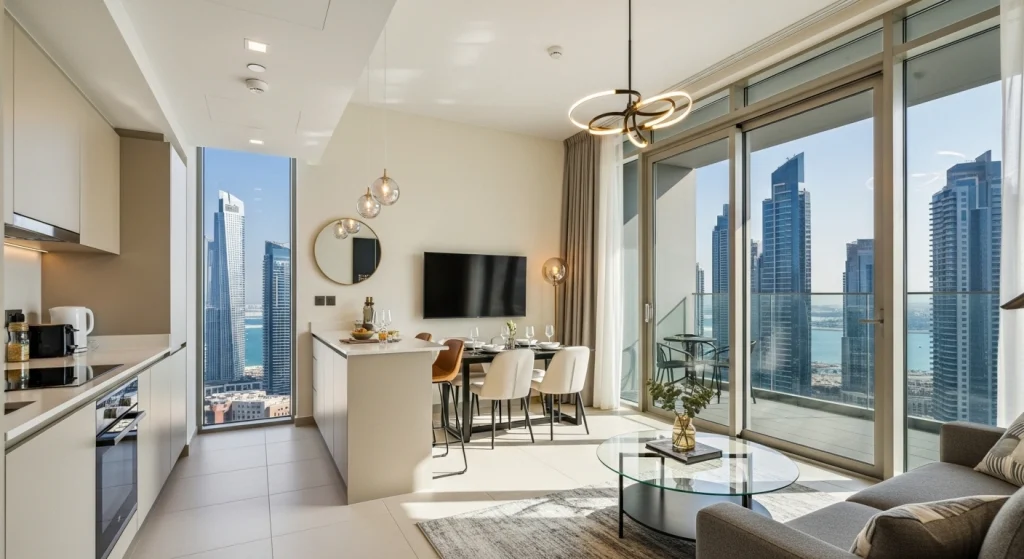
Housing is often the largest slice of the cost of living in Dubai. With a population surge from expats and tourists, demand keeps prices steady or rising. In 2026, expect to allocate 30-50% of your budget here, depending on your setup.
Rent Prices
Renting dominates for expats, as it’s flexible and avoids long-term commitments. Average annual rents vary by area and size. A studio in affordable neighborhoods like Dubai Silicon Oasis costs AED 65,000 yearly (about AED 5,417 monthly), while in premium spots like Downtown Dubai, it’s AED 85,000 (AED 7,083 monthly). For a one-bedroom, expect AED 70,000-110,000 annually in central areas, dropping to AED 55,000 in suburbs.
Villas offer more space for families. A three-bedroom in family-friendly communities like Arabian Ranches might run AED 200,000-300,000 per year. Rents have risen 25-30% in high-demand zones due to limited supply, but areas like Arjan see drops, with one-bedrooms at AED 78,000. Additional fees include 5% agency commission and a security deposit (usually one month’s rent).
Shared living cuts costs. Many young professionals opt for room shares at AED 3,000-5,000 monthly in places like Marina. As an expat shared, “I saved AED 20,000 yearly by sharing a two-bedroom in JLT—it’s social and budget-friendly.”
Buying Property
For long-term stays, buying can stabilize the cost of living in Dubai. Average prices for a one-bedroom apartment are AED 1,000,000-1,600,000 in central Dubai. Off-plan properties in emerging areas like Dubai Hills start lower, around AED 800,000, with payment plans easing the burden.
Ownership comes with perks like residency visas for purchases over AED 2,000,000. However, add 4% transfer fees and 2% agency commissions. Maintenance in gated communities averages AED 15-20 per square foot annually. One buyer recalled, “Buying in Business Bay locked in my costs—now I pay less than renters in the same building.”
Table: Average Housing Costs in Dubai (2026)
| Type | Central Rent (Annual AED) | Suburban Rent (Annual AED) | Purchase Price (AED) |
|---|---|---|---|
| Studio | 85,000 | 55,000 | 709,000 |
| 1-Bedroom | 110,000 | 70,000 | 1,000,000-1,600,000 |
| 3-Bedroom | 170,000 | 115,000 | 2,300,000-2,800,000 |
Food and Groceries
Food expenses form a key part of the cost of living in Dubai, blending affordable local options with pricier imports. A single person’s monthly grocery bill averages AED 600-900, while a family of four might spend AED 2,000-3,000.
Basics like milk (1L) cost AED 6.63, eggs (12) AED 11, and rice (1kg) AED 8.85. Fruits and veggies are reasonable: apples (1kg) AED 9.50, bananas AED 6.88. Meat is higher—chicken (1kg) AED 31, beef AED 43. Shopping at hypermarkets like Carrefour or Lulu yields discounts, especially on near-expiry items.
Dining out varies. A mid-range meal for two is AED 150-500, while fast food like a Big Mac combo is AED 25. Street food in Deira offers shawarmas for AED 5-10. An expat tip: “I cut my food bill by 30% cooking with local spices from markets—fresh and cheap.”
List: Common Grocery Prices (AED)
- Milk (1L): 6.62
- Bread (500g): 4.91
- Eggs (12): 13.28
- Chicken (1kg): 31.07
- Apples (1kg): 9.50
Transportation
Getting around impacts the cost of living in Dubai. Public options keep it low, while cars add up.
Public transport via RTA is efficient. A Nol card trip starts at AED 3, up to AED 7.50 for multiple zones. Monthly passes cost AED 330. Metro and buses cover most areas, with trams in Marina at AED 3 flat.
Taxis start at AED 12, plus AED 2.14 per km. Ride-hailing like Careem averages AED 50 for a 10km trip. Owning a car: fuel is AED 3 per liter, insurance AED 1,000 yearly, but parking and Salik tolls (AED 4 per gate) add AED 200-500 monthly.
One resident shared, “Switching to metro saved me AED 1,000 monthly—no more fuel worries.”
Utilities

Utilities are straightforward, managed by DEWA. For a standard apartment, expect AED 350-800 monthly for electricity, water, and internet. Electricity tariffs: AED 0.23-0.38 per kWh, water AED 7.70-10.12 per m³.
Cooling charges in district-cooled buildings add AED 500-1,000 in summer. Internet starts at AED 229 for basic plans. Housing fees (5% of rent) are divided monthly.
A family example: “Our two-bedroom bill peaks at AED 1,000 in July, but energy-saving habits drop it to AED 600 off-season.”
Education
Education is a significant factor in the cost of living in Dubai for families. Public schools are free for Emiratis but charge expats AED 6,000-12,000 yearly. Private international schools dominate, with fees from AED 12,000-100,000 per year.
British curriculum schools average AED 40,000 for primary, rising to AED 87,000 for high school. Add uniforms (AED 250-600) and transport (AED 3,000-5,000). Universities: Undergraduate at AED 40,000-80,000 annually.
A parent advised, “We chose a mid-tier school at AED 50,000—quality education without the premium price tag.”
Healthcare
Healthcare in Dubai is world-class but requires insurance. Basic plans start at AED 500-1,500 yearly, comprehensive at AED 5,500. Expats must have coverage; employer-sponsored is common.
GP visits cost AED 150-500, specialists AED 300-1,500. Hospital stays average AED 722 per day. Family plans range AED 17,000-33,500.
An expat reflected, “Insurance covers most, but out-of-pocket for extras adds up—plan for AED 500 monthly.”
Entertainment and Leisure
Dubai’s leisure scene is diverse, affecting the cost of living in Dubai. Gym memberships average AED 250-650 monthly. Cinema tickets AED 35-50, theme parks AED 250-350.
Dining out: AED 120-180 per person. Free beaches and parks keep costs low. Monthly leisure for a couple: AED 800-2,000.
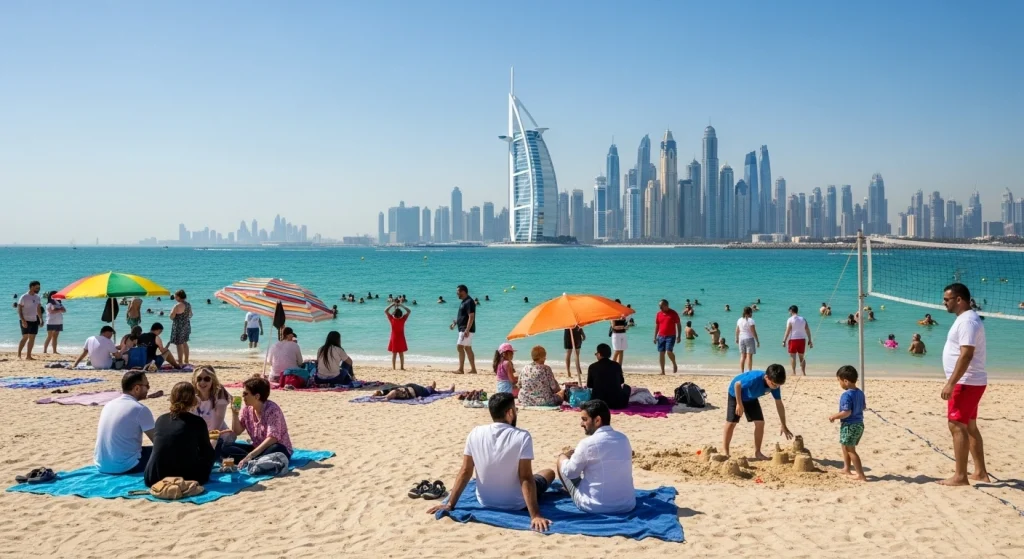
“Apps like Entertainer halve brunch costs—essential for social life,” shared a local.
Average Salaries in Dubai
Salaries offset the cost of living in Dubai. Average monthly net is AED 13,845. Top sectors: Banking AED 53,020, IT AED 22,326.
Entry-level: AED 8,000-12,000; mid-level AED 15,000-25,000; executives AED 30,000+. Tax-free boosts take-home pay.
Cost of Living Comparison: Dubai vs Other Cities
Dubai is 41% cheaper than New York excluding rent, but 38% pricier than Pattaya. Vs. London: 29% less expensive. Vs. Singapore: 38% cheaper.
Table: Monthly Costs Without Rent (Single Person)
| City | AED |
|---|---|
| Dubai | 4,150 |
| New York | 7,000+ |
| London | 5,800 |
| Singapore | 6,800 |
Tips for Saving Money in Dubai
To lower the cost of living in Dubai:
- Use public transport: Save AED 1,000 vs. driving.
- Shop deals: Groupon, Entertainer for 50% off.
- Cook at home: Cut dining by 30%.
- Automate savings: 20% of salary.
- Round-up apps: Micro-save daily.
“Budget apps track everything—turned my spending around,” an expat said.
Expat Experiences
Expats often share mixed views on the cost of living in Dubai. One Reddit user noted, “25k AED monthly gives a decent lifestyle for one—rent, food, fun included.” A family of four budgets AED 18,500: “Comfortable, but watch luxuries.”
Challenges: High rents, but perks like safety and opportunities outweigh. “Worth a few years—saved more than back home,” another shared.
Conclusion
The cost of living in Dubai in 2026 offers a blend of affordability and luxury, making it ideal for those seeking growth. With average expenses at AED 12,000-50,000 monthly depending on family size, strategic choices keep it sustainable. From housing to leisure, understanding these costs ensures a rewarding life in this global hub.
Ready to make Dubai your home? Contact us for personalized advice on relocation and settling in.